What is the difference between HG, EG, and MG linear guides?
Comprehensively analyze the characteristics and applications of different series of linear guides
Linear guide is an important moving component in modern automation equipment and precision machinery, widely used in CNC machine tools, industrial robots, semiconductor equipment, laser cutting equipment, packaging machinery, and automated production lines.
In the actual procurement and equipment design process, many engineers and procurement personnel will encounter similar problems:
What is the difference between HG, EG, and MG series linear guides?
How to choose the appropriate linear guide model for different devices?
Although these three types of linear guides are all used to achieve high-precision linear motion, they are suitable for different industrial scenarios due to differences in structural design, size specifications, load-bearing capacity, and application directions.
This article will provide a detailed introduction to the characteristics and differences of HG, EG, and MG series linear guides, to help clients better select products.
1、 HG series linear guide: high load, high rigidity standard guide rail
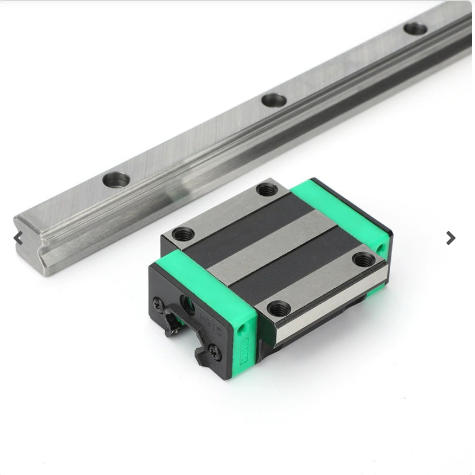
The HG series linear guide is a widely used product in industrial automation equipment, with the main characteristics of:
High bearing capacity
High rigidity
Good operational stability
Suitable for heavy-duty working condition
The HG series usually adopts a four-way equal load design, which can simultaneously withstand loads from up, down, left, and right directions, ensuring stable operation of the equipment in complex stress environments.
Main features of HG series
1. High bearing capacity
Due to the large ball contact structure between the slider and the guide rail, the HG series has high dynamic and static load ratings.
Therefore, it is very suitable for:
CNC machining center
CNC machine tool
Automated processing equipment
industrial machinery
Heavy duty handling equipment
These devices usually require rails to withstand large workloads for a long time.
2. Enhanced rigidity design
Rigidity is an important factor affecting the machining accuracy of equipment.
The HG series improves the resistance of the guide rail system by optimizing the raceway design
vibration
impact
eccentric load
The ability.
For equipment that requires maintaining machining accuracy, such as:
milling machine
grinding machine
Precision machining equipment
The high rigidity HG series can provide more stable athletic performance.
3. Fully Model Numbers
The HG series covers multiple sizes, such as:
HG15
HG20
HG25
HG30
HG35
HG45
Different sizes can meet the needs of small and medium-sized automation equipment to large industrial equipment.
2、 EG series linear guide rail: low installation height and high cost-effectiveness choice
The main features of the EG series linear guide are:
compact structure
Low installation height
Runs smoothly
cost-effective
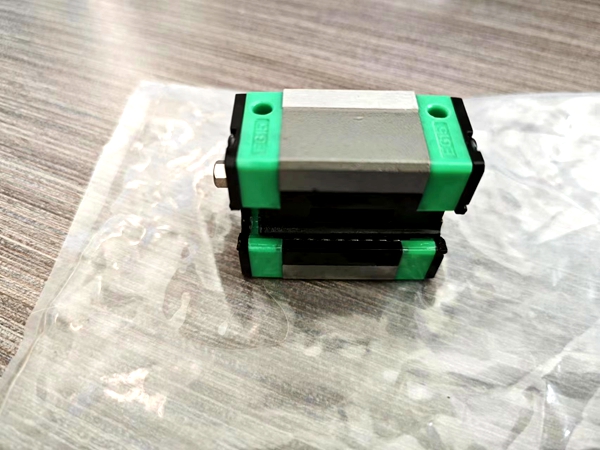
Compared to the HG series, the EG series places more emphasis on space utilization and lightweight design of equipment.
Main features of EG series
1. Low profile design
The EG series adopts a low profile design, which can reduce the overall structural height of the equipment.
This is very important for the following devices:
Automated assembly equipment
semiconductor equipment
Electronic manufacturing equipment
Small mechanical equipment
These devices typically have limited installation space and require more compact motion structures.
2. Suitable for medium load applications
Although the EG series is relatively small in size, it still has good:
Motion Accuracy
load capacity
stability
Suitable for most light and medium-sized automation equipment.
3. More suitable for high-speed sports
Due to its compact structure and low motion resistance, the EG series exhibits good performance in high-speed reciprocating motion scenarios.
For example:
Automatic feeding equipment
packaging machinery
Testing equipment
Both can use the EG series.
3、 MG series linear guide rail: miniaturized precision motion solution
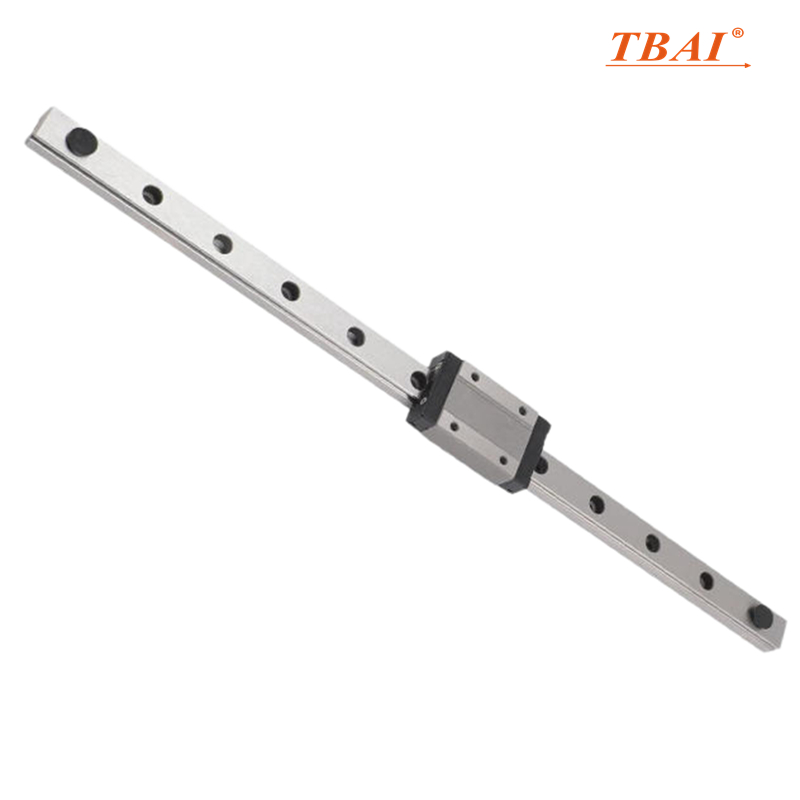
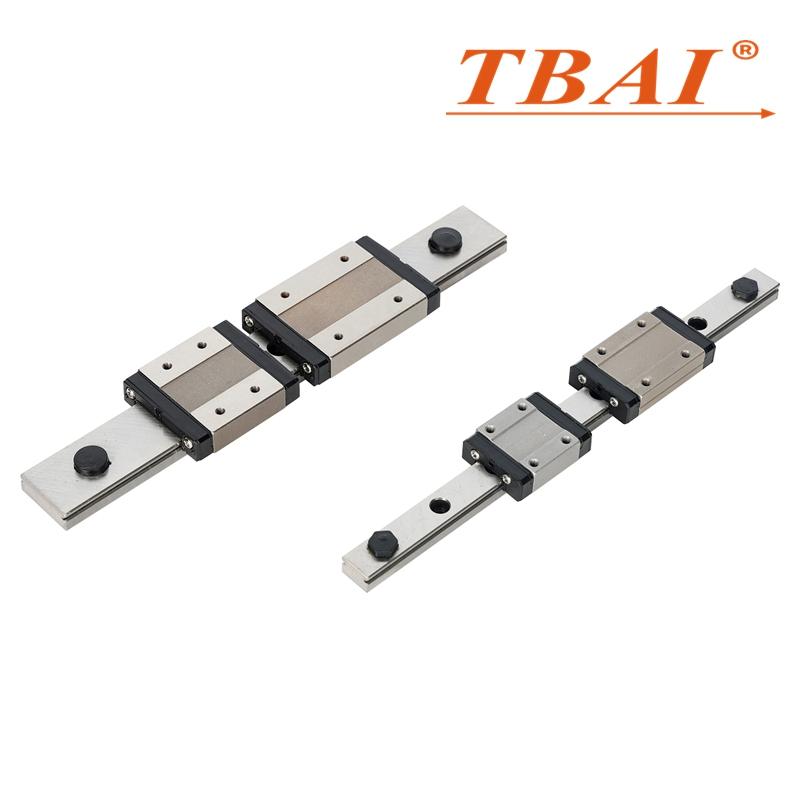
The MG series belongs to the category of miniature linear guides, mainly designed for precision equipment with limited space and low weight requirements.
Its biggest feature is:
small size
light weight
High Precision
Flexible installation
Main characteristic of MG series
1. Miniature design
MG series sizes are usually smaller, for example:
MG7
MG9
MG12
MG15
Match for equipment with strict space requirements.
2. Suitable for precision small equipment
The MG series is widely used in:
electronic device
medical equipment
Small robots
3D printing equipment
Precision testing instruments
These applications typically do not require the load-bearing capacity of large guide rails, but have high requirements for motion accuracy.
3. Flexible installation
Due to its small size, the MG series can be installed in limited spaces, providing greater flexibility for equipment design.
TBAI provides multiple series of linear guide solutions
As a professional supplier of linear motion products, TBAI continues to pay attention to the demand for high-precision and high reliability moving parts in the automation industry.
At present, TBAI provides services including:
Ball screws and others related linear motion products
The product is widely used in:
CNC equipment
automatic production line
Industrial robot
packaging machinery
precision equipment
Through stable production processes, strict quality control, and flexible OEM services, TBAI is committed to providing reliable linear motion solutions to customers worldwide.
summary
There is no absolute difference in the quality of HG, EG, and MG series linear guides, but they are designed for different application scenarios.
The HG series is suitable for high load, high rigidity equipment;
The EG series is suitable for medium-sized automation equipment with limited space;
The MG series is suitable for small, high-precision equipment.
The correct selection method is to make a comprehensive judgment based on equipment load, installation space, operating speed, and accuracy requirements.
Choosing the appropriate linear guide not only improves the stability of equipment operation, but also reduces maintenance costs and extends the service life of equipment.