TBAI | How to choose the appropriate linear guide model?
As an indispensable transmission component in automation equipment, linear guides are widely used in fields such as CNC machine tools, automated production lines, industrial robots, laser cutting equipment, woodworking machinery, and packaging equipment. Choosing the appropriate model of linear guide not only affects the operational accuracy and stability of the equipment, but also directly impacts its service life and maintenance costs.
Faced with a wide variety of guide rail models in the market, many users have the question: how should linear guides be selected? Which parameters are the most important?
This article will summarize several key factors that need to be considered when selecting linear guides based on practical applications.
Clarify the application scenarios of the equipment
There are significant differences in the requirements for linear guides among different devices.
For example:
CNC machining centers require rails with high rigidity and load-bearing capacity;
Automated assembly equipment pays more attention to smooth operation and positioning accuracy;
Semiconductors and electronic devices typically require micro rails and high cleanliness products;
Woodworking machinery and laser cutting equipment pay more attention to dust resistance and wear resistance.
Therefore, before selecting, the working environment, operating speed, load situation, and accuracy requirements of the equipment should be clearly defined.
Select rail specifications based on load
The larger the size of the guide rail, the more suitable it is.
The model selection should be calculated based on the actual load borne by the equipment, including:
workload
impact load
Eccentric load
Installation Method
Generally speaking, small automation equipment can choose 15 series and 20 series guide rails; Medium and large-sized equipment tend to use 25 series, 30 series, or 35 series products. For heavy-duty equipment, higher specification guide rail models can be selected based on actual operating conditions.
Reasonably matching the load capacity can not only ensure stable operation of the equipment, but also help extend the service life of the guide rail.
Pay attention to the precision level of the guide rail
Different applications have different requirements for motion accuracy.
Linear guides usually offer different precision options such as ordinary grade, precision grade, and high-precision grade.
If it is ordinary automation equipment, the general accuracy can meet the usage requirements; For CNC machine tools, precision testing equipment, etc., it is recommended to choose higher precision levels to ensure repeat positioning accuracy and motion stability.
Reasonably selecting accuracy levels while meeting equipment performance requirements can also help control overall procurement costs.
Choose the appropriate slider type
In addition to the guide rail body, the slider model also affects equipment performance.
Common types of sliders include:
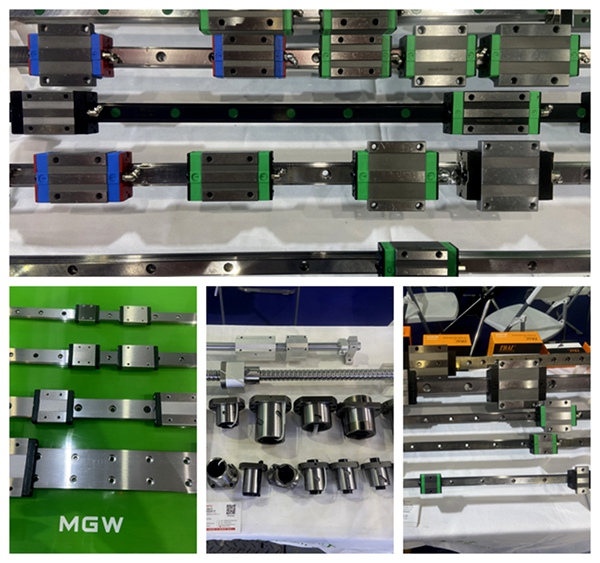
Flange type slider
Square slider
Standard slider
Extended slider
Different structures are suitable for different installation spaces and stress modes.
For example, elongated sliders have a larger contact area and are suitable for carrying larger equipment; The standard slider is suitable for application scenarios with limited installation space.
Consider the usage environment
The working environment of the equipment is also an important basis for the selection of guide rails.
If the device is in the following environment for a long time:
There is a lot of dust present
humid environment
high-temperature environment
corrosive medium
High frequency operation
It is recommended to choose products with sealed structures, dust-proof designs, or special surface treatments, and develop a reasonable lubrication and maintenance plan to improve the reliability and service life of the guide rail.
Choose manufacturers with stable supply capabilities
In addition to the product itself, the manufacturing capabilities of suppliers are also worth paying attention to.
A professional linear guide rail manufacturer can usually provide:
Complete product line
Stable product quality
Fast delivery capability
OEM customization service
Technical support and after-sales service
For equipment manufacturing enterprises, a stable supply chain can effectively reduce procurement risks and improve project delivery efficiency.
TBAI provides customers with diverse linear motion solutions
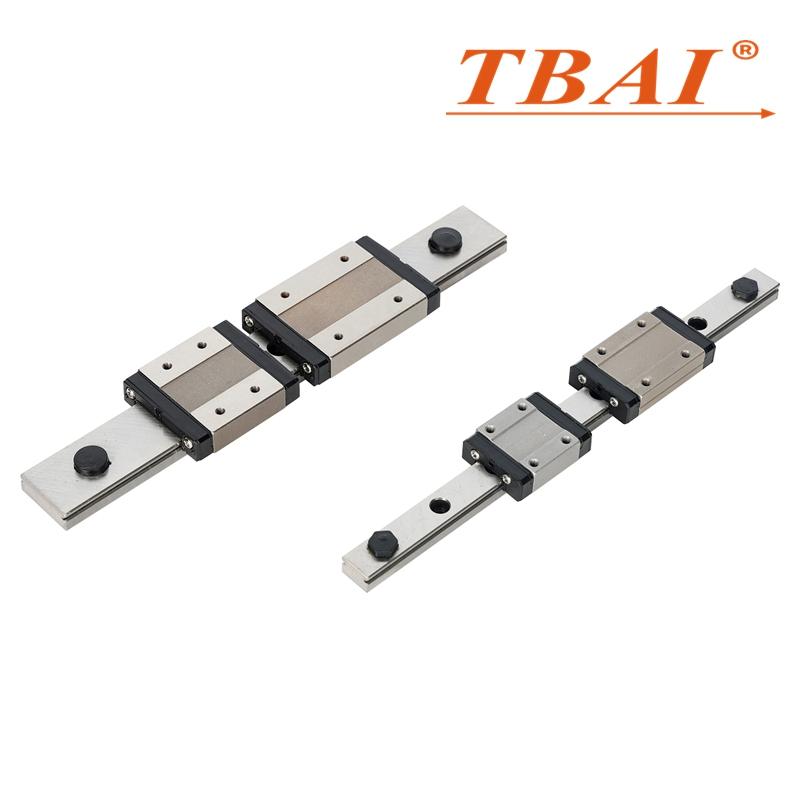
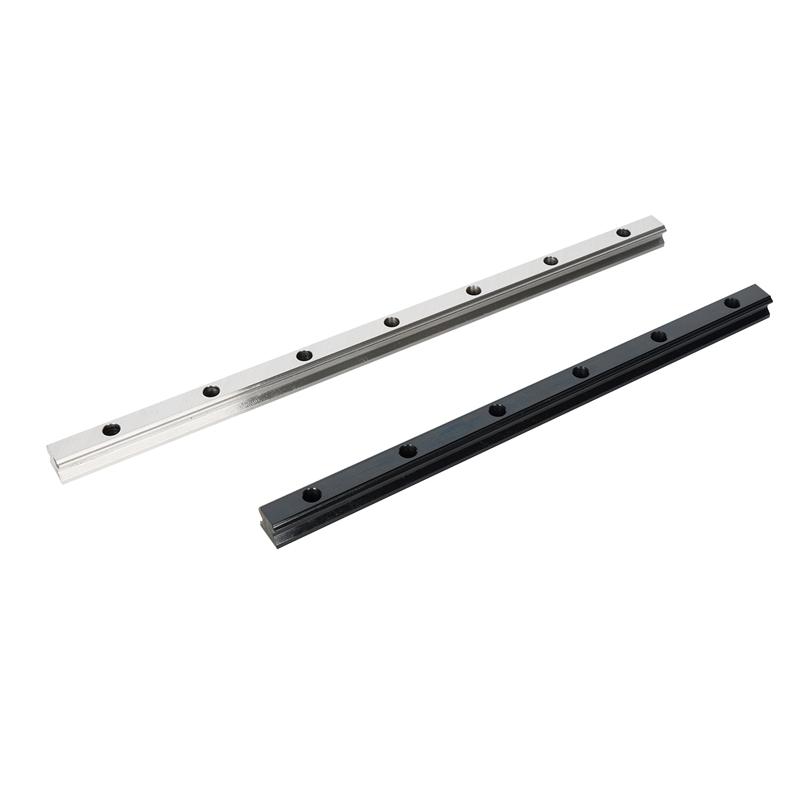
As a brand specializing in the manufacturing of linear motion products, TBAI provides full series linear guide products such as HG series, EG series, MG series, as well as supporting products such as ball screws, which can meet the application needs of different fields such as automation equipment, CNC machine tools, industrial robots, etc.
Relying on mature manufacturing processes, strict quality management systems, and rich export experience, TBAI can provide stable and reliable products and flexible OEM customization services to global customers, helping them optimize equipment performance and procurement costs.
Conclusion
The selection of linear guides is not simply about choosing size or model, but should comprehensively consider multiple factors such as equipment load, operating accuracy, working environment, installation method, and supplier strength.
Scientific and reasonable selection can not only improve equipment operation efficiency, but also reduce maintenance costs in the later stage and extend equipment service life. If you encounter any problems during the guide rail selection process, it is recommended to communicate fully with professional manufacturers and choose the most suitable product solution based on specific application requirements.