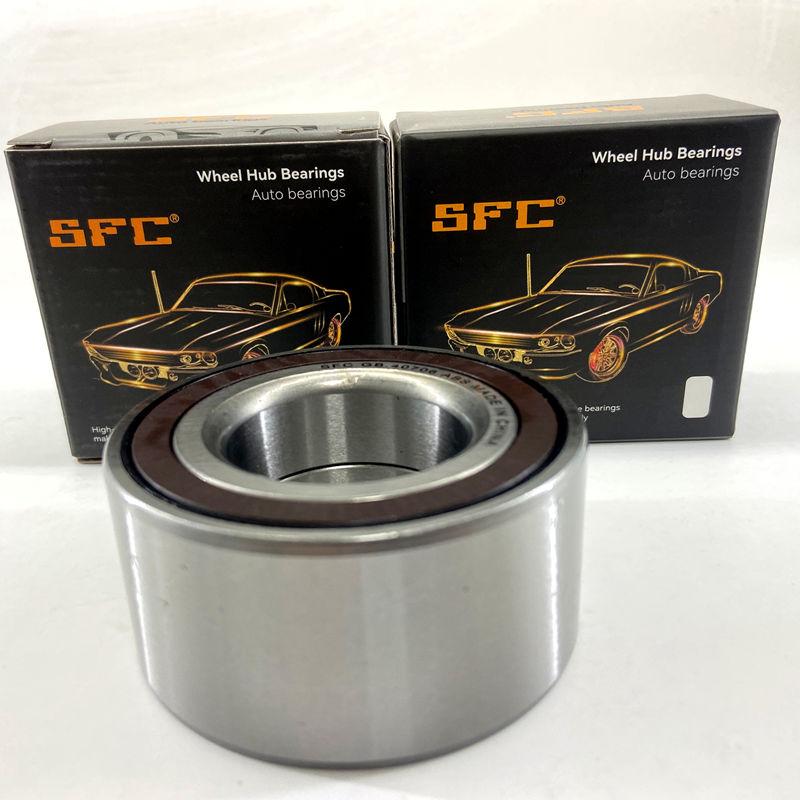
Installation and disassembly of bearings
Proper installation and disassembly are key to ensuring the performance and lifespan of bearings. Improper operation can easily lead to damage to the raceway, deformation of the cage, and even early failure.
Installation points:
Clean environment: Ensure that the shaft, bearing seat, and tools are dust-free and free of burrs.
Matching tolerance: Select appropriate interference/clearance fit according to the working conditions to avoid forced tapping.
Heating installation: For the inner ring with interference fit, it is recommended to use induction heating to 80-120 ℃ (no open flame), expand evenly, and then insert it into the shaft shoulder.
Uniform application of force: Use a specialized press fitting tool, and the pressure should be applied to the ring with interference fit (such as installing the inner ring under force).
Key points for disassembly:
Priority cold dismantling: Use a puller or hydraulic dismantling tool to avoid hammering.
Heating assistance: If the rust is stuck, the bearing seat (outer ring) can be locally heated to expand and then disassembled.
Protective components: Do not damage the surface of the shaft or bearing seat during disassembly to avoid affecting the accuracy of the next installation.
Tip: For precision equipment such as motors and machine tool spindles, it is recommended to use professional tools with temperature measurement and positioning functions, and record installation parameters for maintenance and traceability.
Standardized operation, twice the result with half the effort - one correct installation is better than ten repairs.